
In this issue6 sections
The inventory arrived, but the confidence left. The goods that importers pulled forward all summer are now sitting in warehouses. Census’s advance report shows wholesale inventories at $965.7 billion in August, up 6.6% from a year earlier, and retail inventories at $881.6 billion, up 4.8%. Goods imports rose another $17.4 billion in the month. The shoppers those goods were bought for are losing heart. The Conference Board’s confidence index fell 6.7 points to 81.9 in September, and the University of Michigan’s sentiment reading fell to 48.1. August spending still rose 0.9%, but the saving rate slipped to 4.1%. Sellers are acting on the gap. On Tuesday Target cut prices on nearly 2,000 home and apparel items, before Halloween, and Conagra’s volume fell 2.1% while it held price. Diesel fell 14.7 cents to $6.382, ending three weeks of records, but Brent still traded above $102 and three more tankers were struck near Hormuz. Policy added costs in the other direction: a 100% default tariff on patented drugs took effect for most manufacturers, Canadian alcohol was banned at the border, and the main global tariff went back to court. For most of this year, supply chain teams worried about getting goods in. In the fourth quarter, the risk is getting them sold at a price that covers what it cost to land them.
Retail & Consumer Spotlight: Spending Held. Confidence and Margin Didn’t.
Last Edition’s Question, Partly Answered
Last edition argued that August’s 1.2% retail sales gain was a nominal win built on essentials. The Bureau of Economic Analysis data released Wednesday supports that reading. Personal spending rose 0.9% in August, or $190.8 billion, and 0.6% after inflation. Goods took $114.1 billion of the increase. Income did not keep up: personal income rose only 0.2%, and the saving rate fell to 4.1%. PCE inflation ran 3.4%, core 3.0%. Households are drawing down savings to keep spending.
The surveys say that won’t last. The Conference Board’s index fell to 81.9 from 88.6, with the Present Situation index down 7.9 points to 109.3 and Expectations down 5.9 points to 63.6. “The Consumer Confidence Index deteriorated notably in September, following two prior months of softening,” said chief economist Dana M. Peterson. Consumers’ average 12-month inflation expectation rose to 6.1%. Michigan’s final September sentiment reading fell 3.6 points to 48.1, and one-year inflation expectations jumped to 4.6% from 4.0%.
The Shelves Are Full
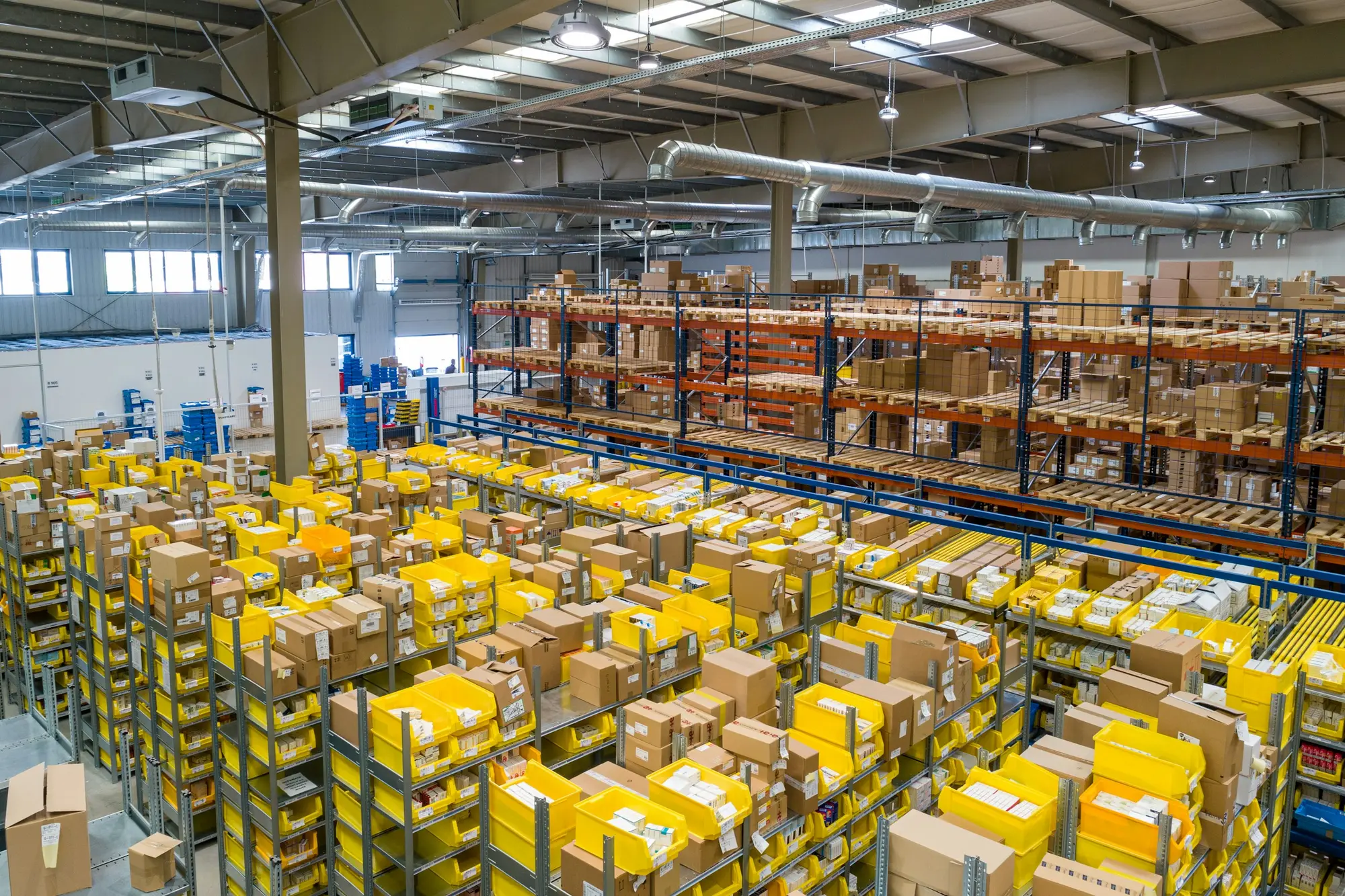
The inventory data is what makes the mood a supply chain problem. Wholesale inventories rose 0.7% in August and stand 6.6% above a year earlier. Retail inventories rose 0.3% and are 4.8% higher. August goods imports were $336.1 billion, up $17.4 billion from July, and the goods deficit widened $13.7 billion to $132.6 billion. That is the summer pull-forward, landed and paid for, and it now has to sell to consumers who just told two surveys they feel worse. Last edition argued the January 10 truce date removed the reason to keep accelerating cargo. Most of that cargo is already here.
Target Moves First on Price
Target’s answer came on Tuesday: lower prices on nearly 2,000 items across home and apparel. A Threshold queen comforter goes to $69 from $89. Adobe forecasts U.S. online holiday sales of $275.1 billion for November and December, up 6.7%, with discounts of up to 30% during Cyber Week. Holiday sales can hit their dollar forecasts while margin shrinks to pay for the discounts. Last edition showed Costco funding price cuts with tariff refunds; Target is cutting without that cushion.
Packaged Food Is Winning on Price, Losing on Volume
Conagra’s fiscal first quarter, reported Wednesday, shows the same split. Net sales fell 1.4% to $2.6 billion, and organic sales fell 1.1% as volume dropped 2.1% and price/mix added 1.0%. Gross profit fell 3.4% to $619 million. About $4 million in tariff refunds partly offset cost-of-goods inflation, and the company reaffirmed guidance for organic sales down 1% to 3%. McCormick, reporting Thursday, grew organic sales 1.9%, all of it from price, as volume/mix slipped 0.3%. Its gross margin widened 190 basis points. “Disciplined productivity initiatives helped offset rising input and freight costs, supporting margin expansion,” said CEO Brendan Foley. Suppliers should expect retailers to push the cost of Target-style price cuts back up the chain in the next negotiation round. Before that call, know your unit volumes, not just your dollar sales, and which of your costs you can show actually rose.
Global Logistics Pulse: Ocean Rates Peak as the Cargo Rush Ends
Diesel: The Streak Breaks, the Risk Doesn’t
The Department of Energy’s weekly diesel average fell to $6.382 a gallon for September 28, down 14.7 cents from the $6.529 record. It is the first decline after three straight weekly records, and diesel is still $2.63, or 70%, above the $3.754 of a year ago. It isn’t a turn. Brent crude was at $102.56 a barrel on Wednesday morning, about $35.87 above a year earlier. UKMTO issued three warnings on September 30 for projectile strikes on tankers in the Strait of Hormuz the day before. Federal Reserve Governor Michael Barr said in Detroit on Tuesday that “high energy prices are still with us, and there is considerable uncertainty about when the conflict driving them may be resolved.” At $6.382, a surcharge table pegged to a $3.50 base moves about 48 cents a mile at 6 miles per gallon, down from 50.5 cents last week. Take the 2.5-cent relief, but don’t renegotiate your fuel schedules around one weekly decline.
Truckload: Fuel Is Still the Whole Story
DAT’s report for September 20 to 26 shows the same split as last edition. The dry van all-in spot rate rose 5 cents to $3.01 a mile, while van linehaul held at $2.17. Reefer all-in rose 4 cents to $3.63 with linehaul down 2 cents to $2.71. Flatbed rose 5 cents to $3.60 with linehaul down a cent to $2.59. DAT analyst Dean Croke attributed the entire all-in increase to fuel. Capacity is getting tighter even though freight isn’t growing: total load posts slipped 1% while truck posts fell 4%, and the van load-to-truck ratio rose to 11.4 from 10.9. FreightWaves SONAR put national tender rejections near 14% late last week, with reefer near 20%. At those rejection rates, contract rates are what moves next. Before awarding the bids now in progress, ask each carrier for its September tender acceptance on your lanes. A carrier that won’t commit to a number now will push your freight to the spot market in November.
Ocean: The Transpacific Topped Out Going Into Golden Week
Freightos’ Asia–U.S. West Coast index rose 4% to about $8,400 per 40-foot container, its high for the year, while the East Coast held at about $9,600. Asia–Europe moved the other way: Asia–North Europe fell 9% to about $3,400 and Asia–Mediterranean 7% to $3,600. Freightos cites Sea-Intelligence estimates that congestion ties up more than 8% of global capacity, and expects demand to cool once Golden Week (October 1 to 7) passes and peak season ends. Drewry’s September 24 index read $4,468, with Shanghai–Los Angeles at $7,838, and Drewry forecast rates to fall into the holiday.
The volume data agrees. NRF’s Global Port Tracker forecast September imports at 2.31 million TEUs, up 9.6%, falling to 2.11 million in October and about 2.0 million in November. The Port of Los Angeles handled 955,907 TEUs in August, and June through August was the busiest three months in its history. With the cargo landed, inventories high and shoppers wary, a 2026 high in transpacific rates is a peak, not a trend. Don’t chase early-October spot. Book only the cover you need for the next three weeks, and price November through January after the holiday, when carriers have to fill ships.
Rail and Air: Volume Is Real Where It’s Cheaper
U.S. intermodal rose 6.3% to 301,610 units in the week ending September 26, and carloads rose 3.0%, led by chemicals and metallic ores. IATA reported August air cargo demand up 4.4% with capacity down 0.1%, while jet fuel ran 79.2% above a year ago. Intermodal growing while truck all-in rates rise on fuel is a mode shift. On long lanes with a few days of slack, get an intermodal quote before the next fuel reset.
Parcel: Peak Pricing Is Live
UPS’s peak surcharges started September 27 and FedEx’s a day later. Saltbox says USPS’s temporary rate increase, averaging about 6%, begins October 4. On Wednesday USPS and Amazon started a small same-day delivery pilot, capped at 200 packages a site, in Morgantown, West Virginia, and Lake Havasu City, Arizona. Before per-package demand surcharges begin October 25, model USPS’s 6% increase against the carriers’ fees on your residential lanes.
Manufacturing: The Test of Last Edition’s PMI Surge
Last edition asked whether the October 1 data would confirm S&P Global’s 57.0 flash PMI or expose it as hedging. The first answer is a revision. S&P’s final September reading came in at 55.9, below the flash but above August’s 53.9, with vendor lead times lengthening at the fastest pace since August 2022. The regional surveys show what is driving it. The Chicago Business Barometer jumped 11.7 points to 58.8 as production rose 15.5 points, but backlogs contracted for a third month and employment slipped back into contraction. The Dallas Fed’s production index rose to 29.5 from 16.1 and raw materials prices to 52.2 from 44.1, while its six-month business outlook fell to 20.8 from 37.2. Output is up now, deliveries are slower and expectations are weaker. That fits buyers ordering early better than a lasting expansion. Keep longer inbound lead-time buffers through Q4, but don’t add stock on the strength of this PMI. The shelves are already full.
Trade Policy Watch: The Tariff Wall Is Becoming Many Smaller Walls
Pharmaceuticals: 100% Is Now the Default
The week’s largest tariff change got the least attention. At 12:01 a.m. on September 29, the Section 232 pharmaceutical tariffs under Proclamation 11020 extended to every manufacturer not listed in Annex III. The default rate on patented drugs is now 100%. Companies with a Commerce-approved onshoring plan pay an added 20%, rising to 100% on April 2, 2030. Products from the EU, Japan, South Korea and Switzerland/Liechtenstein pay 15% in total, and U.K. products pay no additional duty. Firms with an onshoring plan and a most-favored-nation pricing deal pay nothing until January 20, 2029. Generics and biosimilars are exempt “at this time.” By August 31, 26 manufacturers representing about 89% of the branded market had signed pricing agreements. The 100% rate falls mainly on mid-sized and smaller firms. If you import branded drugs or their ingredients, get each supplier’s tier in writing this week, and treat any undocumented exemption as unconfirmed.
Canada: The Ban Is Mostly Symbolic. The Standoff Isn’t.
The Section 338 import bans took effect Tuesday. They cover about $967 million a year of Canadian goods, 87% of it alcohol, along with whey and Can-Am Spyder and Canyon motorcycles from Bombardier Recreational Products, according to the AP. “For a lot of these goods, the 50% was already acting as a de facto ban by making importation from Canada into the United States uneconomical,” said trade attorney Patrick Childress. The standoff matters more than the bans. President Trump said Canada would “come in and they’re going to say, ‘sir we are sorry.’” Canadian trade minister Dominic LeBlanc replied, “I’m not thinking that the government of Canada is going to apologize for standing up for Canadian workers, Canadian businesses, defending our economy.” Last edition’s task was getting entries filed before the ban. The question now is how long the dispute lasts: formal talks remain suspended, and the AP notes the standoff now threatens renewal of the USMCA. Treat Canadian supply of anything near the tariff list as a 2027 risk, not something that ends in Q4.
China: Small Lists, Long Shadow
The follow-up to the Trump–Xi summit, published September 28, put product detail on the truce extension. Each side published a list covering $30 billion of the other’s goods for tariff cuts. The U.S. list has 77 Chinese items, including microwave ovens, fish hooks, artificial flowers and weighing scales. China’s has more than 1,600 U.S. products, including poultry, dairy, eggs, peanuts and canned tomatoes. China’s 10% tariff on most U.S. goods stays, and soybeans for food and crushing were left out. DTN notes that U.S. export sales show about 10.2 million metric tons committed for the 2026–27 crop, against China’s 25 million-ton annual pledge. Freightos says U.S. port fees on China-linked vessels are likely postponed again, pending an official notice. Check the 77 items against your HTS codes; everything else still turns on January 10.
The Main Tariff Is Back in Court
On Wednesday a three-judge panel of the Court of International Trade heard Burlap and Barrel v. Greer, a challenge brought by small businesses and Democratic-led states to the Section 301 “forced labor” tariffs. Those tariffs charge 10% to 12.5% on 60 economies covering about 99.4% of U.S. imports, and they replaced the Section 122 tariff struck down in May. The plaintiffs argue that USTR imposed a near-universal tariff without the country-specific findings the statute requires. Justice Department lawyers argue that USTR complied with the statute. The panel pressed both sides and will rule in writing later. It is the third broad tariff authority to reach a courtroom this year. The IEEPA tariffs fell in February and Section 122 in May. Meanwhile the administration keeps adding sector- and product-specific tariffs, pharma and Canada this week, which rest on narrower legal ground. Keep entry records for every Section 301 payment in a form that would support a refund claim, and base your 2027 landed-cost model on the sector duties, not the broad tariff.
📊 Numbers That Matter
Weekly Dashboard: Week of September 28–October 2, 2026
| Metric | Reading | Source |
|---|---|---|
| Consumer confidence (Sept) | 81.9 vs. 88.6; Present Situation 109.3 (−7.9); Expectations 63.6 (−5.9); 12-mo inflation expectation 6.1% | Conference Board |
| Consumer sentiment (Sept final) | 48.1 (−3.6); 1-yr inflation expectations 4.6% vs. 4.0% | University of Michigan via ABA Banking Journal |
| Personal income and outlays (Aug) | Spending +0.9% ($190.8B), real +0.6%; goods +$114.1B; income +0.2%; saving rate 4.1%; PCE +3.4% YoY, core +3.0% | BEA |
| Inventories and trade (Aug advance) | Wholesale $965.7B (+0.7% MoM, +6.6% YoY); retail $881.6B (+0.3%, +4.8%); goods imports $336.1B (+$17.4B); goods deficit $132.6B | Census |
| Retail diesel (DOE weekly, Sept 28) | $6.382/gal, −14.7¢ WoW; first decline after three records; +$2.63 (~70%) YoY; Brent $102.56 Sept 30 | EIA; Fortune |
| DAT truckload (Sept 20–26) | Van all-in $3.01 (+5¢), linehaul $2.17 (flat), L/T 11.4 vs. 10.9; reefer $3.63 / $2.71; flatbed $3.60 / $2.59; truck posts −4% | DAT via The Trucker |
| Freightos FBX (Sept 30 update) | Asia–USWC ~$8,400/FEU (+4%, 2026 high); Asia–USEC ~$9,600 (flat); Asia–N. Europe ~$3,400 (−9%); Asia–Med $3,600 (−7%) | Freightos |
| Drewry WCI | $4,468/40ft (Sept 24, −1%); Shanghai–LA $7,838 (+2%); Shanghai–NY $10,373 (flat) | Drewry |
| Rail (week ending Sept 26) | Total 537,397 (+4.8% YoY); intermodal 301,610 (+6.3%); carloads 235,787 (+3.0%); YTD intermodal +4.1% | AAR via AJOT |
| Air cargo (Aug) | Demand +4.4% YoY; capacity −0.1%; Asia–N. America +13.2%; jet fuel +79.2% YoY | IATA |
| S&P Global US manufacturing PMI (Sept final) | 55.9 vs. 57.0 flash and 53.9 Aug; vendor lead times longest since Aug 2022 | S&P Global via Trading Economics |
| Regional manufacturing (Sept) | Chicago Business Barometer 58.8 (+11.7, highest since May); Dallas Fed production 29.5 vs. 16.1, raw materials prices 52.2 vs. 44.1, delivery time 17.5 vs. 12.5 | MNI; Dallas Fed |
| Section 232 pharma (from Sept 29) | 100% default on patented drugs for non-Annex III firms; 20% with onshoring plan; 15% EU/Japan/Korea/Swiss; 0% UK; generics exempt; 26 firms (~89% of branded market) on MFN deals | Proclamation 11020 via PharmaSource |
| Canada Section 338 bans (from Sept 29) | ~$967M/yr of imports banned, 87% alcohol; whey; BRP motorcycles | AP via Times Free Press |
| U.S.–China tariff lists (Sept 28) | $30B each way; 77 Chinese items, 1,600+ U.S. items; China’s 10% on most U.S. goods stays; truce to Jan 10, 2027 | Al Jazeera; DTN |
Looking Ahead
- October 1–7: China’s Golden Week; Freightos expects demand to cool after the holiday, which is the moment to price November–January transpacific cover
- October 4: USPS temporary rate increase, averaging about 6%, takes effect; compare it with UPS and FedEx peak fees on residential lanes
- October 20: The USPS–Amazon same-day pilot expands to Columbia, South Carolina
- October 25: UPS and Amazon Shipping per-package demand surcharges begin
- October 28: Census advance indicators for September, the next read on whether wholesale inventories keep climbing above 6.6% YoY
- October 29: BEA’s September income and spending report; watch whether the 4.1% saving rate falls further
- Any day: The Court of International Trade’s written ruling on the Section 301 tariffs; a loss for the government would be the third broad tariff struck down this year
- January 10, 2027: U.S.–China truce expiry, in the middle of the spring ordering cycle
The Bottom Line
The goods made it in on time. Now they have to sell at prices that cover what it cost to land them.
Move from procurement mode to sell-through mode. With wholesale inventories 6.6% above a year ago and confidence at 81.9, the expensive mistake in Q4 is a second wave of inbound, not a stockout. Cut October and November purchase orders to what point-of-sale data supports, push vendors to hold or delay cargo that hasn’t shipped, and pull markdown planning forward. Target has already started.
Buy freight late and in small pieces. Transpacific rates hit a 2026 high just as the cargo rush ended, diesel fell for the first time in four weeks, and truckload linehaul is flat while fuel does the moving. Hold off on Q4 ocean commitments until after Golden Week, price trucking bids with fuel and linehaul quoted separately, and run intermodal on long lanes before the next fuel reset. Don’t lock in rates set at a peak.
Plan landed cost around the tariffs most likely to hold. In one week a 100% pharma tariff took effect, a Canadian product ban started, and the broad Section 301 tariff went back to court, where two broad tariffs have already fallen this year. Sector-specific Section 232 and product-specific duties are the ones most likely to survive. Base the 2027 cost model on them, keep refund-ready records for every broad-tariff payment, and confirm each supplier’s pharma tier in writing.
Strategic question for supply chain leaders: You bought for a shopper who spent all summer. If the September surveys are right and that shopper stops, what share of the inventory you just landed can you sell at full price, and who in your supply chain pays for the rest?